Build practical capability
Give selected people a clear framework for recognising mental health distress, beginning a supportive conversation and offering appropriate initial help.
An accredited and practical 12-hour programme for organisations and groups that want people to recognise mental health distress, respond with greater confidence and offer appropriate initial support until further or professional help is available.
Enquire about this course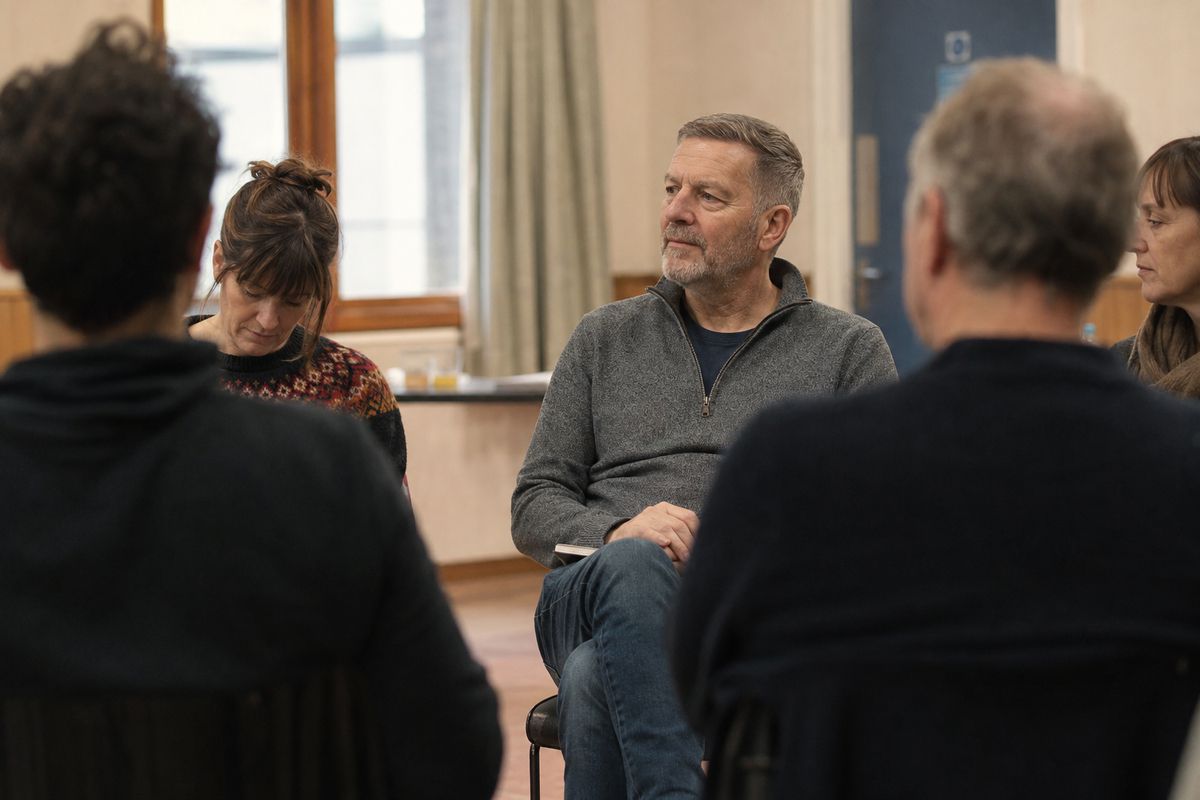
Scotland's Mental Health First Aid (SMHFA) is an established 12-hour programme that must be delivered by a qualified SMHFA instructor. Programme quality is continuously monitored by Public Health Scotland.
Green Ribbons delivers the accredited SMHFA programme through Jean Pryde, who is qualified to facilitate the course. The content and core learning belong to the national programme; the Green Ribbons difference is in how that material is facilitated, discussed and made relevant to the people in the room.
Mental Health First Aid is an initial response to someone experiencing mental health distress, in much the same way that physical first aid offers immediate help before further care is available. It is not about diagnosing someone, providing therapy or taking responsibility for resolving another person's difficulties.
The course gives participants a practical framework for recognising when someone may need help, approaching a conversation, listening without judgement and offering appropriate initial support. It also looks at what to do in a mental health crisis, including when someone may be at risk of suicide, and how to help someone towards suitable professional or other support.
Across 12 hours, participants explore common mental health problems, recovery, stigma and discrimination, alcohol and drugs, suicide intervention and listening skills. The aim is to build knowledge and confidence while keeping the boundaries of the Mental Health First Aider role clear.
Workplaces, professional teams, public and third-sector organisations, education settings and community groups that want people to have a clearer, practical framework for responding when someone may be experiencing mental health distress.
Give selected people a clear framework for recognising mental health distress, beginning a supportive conversation and offering appropriate initial help.
Help participants feel better prepared to listen, ask appropriate questions and respond when someone may be struggling or experiencing a crisis.
Develop people who understand the limits of their role and can help someone towards suitable professional, community or other support rather than trying to carry responsibility themselves.
Understand and practise the five-step approach used to provide initial Mental Health First Aid support.
Build awareness of common mental health problems and some of the signs that may indicate a person is experiencing distress.
Develop skills in asking appropriate questions, listening carefully and responding in a calm, supportive way.
Understand what to say and do when someone may be experiencing a mental health crisis, including when there are concerns about suicide.
Learn how to provide immediate help while recognising when professional or other appropriate support is needed.
Explore recovery, self-help, and the connections between mental health, alcohol and drugs, stigma and discrimination.
Guidance on what Mental Health First Aid is, how the role works in practice and why appropriate boundaries matter.
How attitudes, discrimination and stigma can influence people's experiences of mental health problems and their willingness to seek support.
Understanding recovery from mental health problems and the role of hope, self-help and appropriate support.
The relationship between alcohol, drugs and mental health problems, and what this can mean when offering initial support.
An introduction to recognising risk, approaching conversations about suicide and responding appropriately when someone may be in crisis.
The importance of listening without judgement, asking appropriate questions and helping someone feel heard.
Basic information about depression and how to offer Mental Health First Aid to someone experiencing it.
Basic information about anxiety and how to offer appropriate initial support.
Basic information about psychosis and how to offer first aid to someone experiencing a psychotic episode.
The 12 hours can be delivered as two full days, four half days or six two-hour sessions, allowing the programme to be arranged around different groups and workplaces.
The course includes a mixture of activities, films and discussion, with opportunities to practise listening and responding rather than relying on presentation alone.
Participants receive the SMHFA manual to take away and use as a reference after the course.
Participants receive a certificate of attendance on completion of the course.
Scotland’s Mental Health First Aid has a defined programme, but the experience in the room also depends on the facilitator. Jean Pryde is an accredited SMHFA facilitator and brings 30 years’ experience working in mental health settings to the way the course is delivered.
Green Ribbons takes a practical, plain-speaking approach to difficult subjects and has delivered training for organisations including Diageo, Macallan and the Royal College of Veterinary Surgeons, alongside professional bodies and community groups.
Tell us a little about your group and what you’re looking for. We can talk through whether this course is the right fit and the practical arrangements.
Open this course on your phone or send it to someone else.
Scan with your phone camera to open the same information on your mobile.
Pass the link to a colleague, save it for later or share it with someone else.