Training that reflects rural working life
Connect the recognised SMHFA programme to the realities of gamekeeping, estate work, isolation, field-based responsibilities and the pressures that can come with working in rural settings.
A tailored 12-hour Scotland's Mental Health First Aid programme for gamekeepers and estate teams, combining the recognised SMHFA framework with discussion and examples that reflect the realities of rural, outdoor and often isolated working environments.
Enquire about this course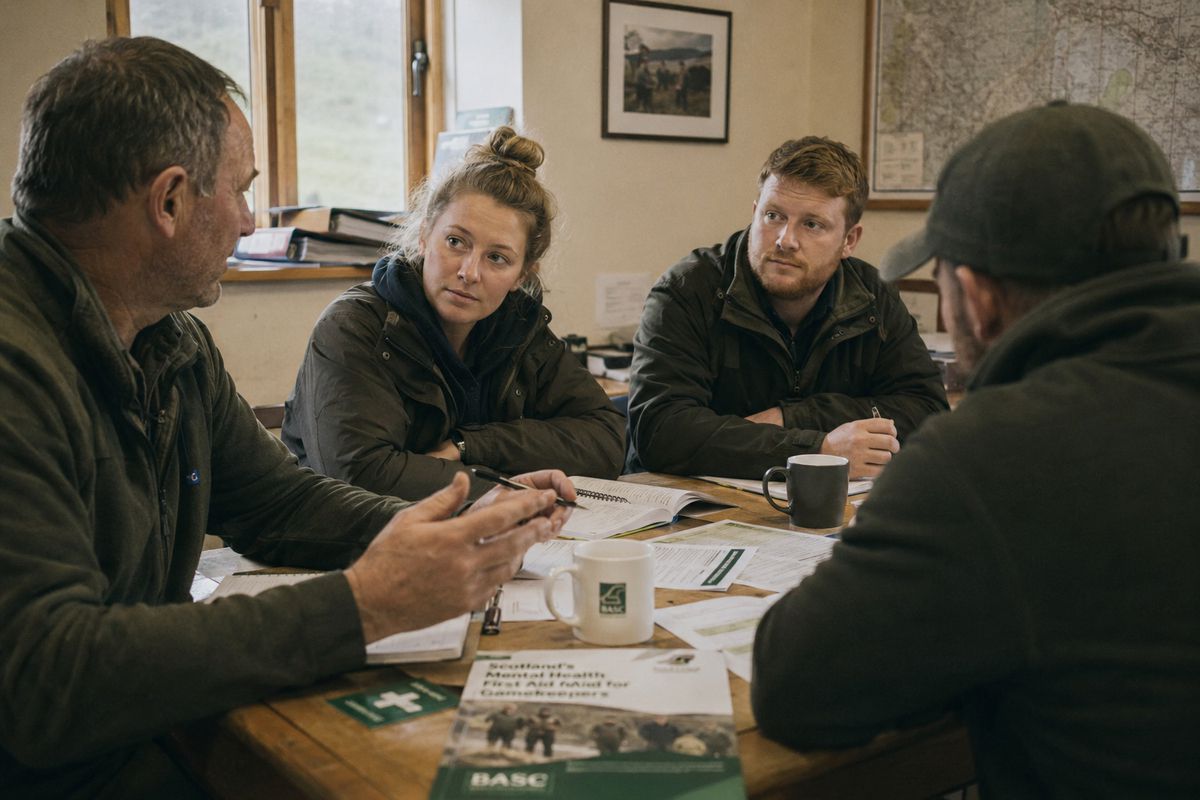
Scotland's Mental Health First Aid (SMHFA) is an established 12-hour programme that must be delivered by a qualified SMHFA instructor. Programme quality is continuously monitored by Public Health Scotland.
This tailored version keeps the recognised SMHFA programme intact while making the discussion, examples and context more relevant to gamekeeping and estate work. The core learning remains SMHFA; the tailoring sits in how that learning is facilitated and connected to the pressures people may encounter in rural and field-based roles.
Green Ribbons brings a strong rural-informed perspective to the delivery, helping participants relate the course to working patterns, responsibilities and environments that can feel very different from a conventional workplace.
Gamekeeping can involve long hours, physical work, unpredictable schedules and significant periods spent working alone or in remote locations. The role can also bring responsibility for land, wildlife and animal welfare, difficult weather, public scrutiny, financial or employment uncertainty, and situations that require calm decision-making under pressure.
None of those things means someone will experience poor mental health. But in a working culture where people may be used to getting on with the job, it can sometimes be difficult to notice when stress is building, start a conversation or ask for support.
This tailored SMHFA course gives gamekeepers and estate teams a practical framework for recognising when someone may be struggling, approaching a conversation, listening without judgement and offering appropriate initial support. It also covers mental health crisis and suicide risk, while keeping clear boundaries around what a Mental Health First Aider can and cannot be expected to do.
Gamekeepers, head keepers, estate staff, managers and others working alongside gamekeeping teams who want a recognised, practical framework for supporting mental health conversations in rural and field-based working environments.
Connect the recognised SMHFA programme to the realities of gamekeeping, estate work, isolation, field-based responsibilities and the pressures that can come with working in rural settings.
Help people feel better prepared to notice changes, approach a colleague they are concerned about and listen without feeling they need to diagnose or fix the problem.
Build a shared understanding of what appropriate initial support looks like, where the Mental Health First Aider role ends and when professional, specialist or urgent help may be needed.
Understand and practise the five-step approach used to provide initial Mental Health First Aid support.
Build awareness of common mental health problems and consider how distress or changes in wellbeing may show up in rural, isolated or field-based working environments.
Develop skills in asking appropriate questions, listening carefully and responding in a calm, supportive way without rushing to solve the situation.
Explore how attitudes around self-reliance, coping and mental health can make it harder for people to speak openly or seek support.
Understand what to say and do when someone may be experiencing a mental health crisis, including when there are concerns about suicide.
Learn how to provide immediate help while recognising personal boundaries and when professional or other appropriate support is needed.
We consider some of the pressures that may be relevant in gamekeeping and estate settings, including isolation, long or irregular hours, physical demands, weather, responsibility, public scrutiny and access to support.
Guidance on what Mental Health First Aid is, how the role works in practice and why appropriate boundaries matter.
How attitudes, assumptions and stigma can influence people's experiences of mental health problems and their willingness to speak openly or seek support.
Understanding recovery from mental health problems and the role of hope, self-help and appropriate support.
The relationship between alcohol, drugs and mental health problems, and what this can mean when offering initial support.
An introduction to recognising risk, approaching conversations about suicide and responding appropriately when someone may be in crisis.
The importance of listening without judgement, asking appropriate questions and helping someone feel heard.
Basic information about depression and anxiety, how they can affect people in different ways and how to offer appropriate initial support.
Basic information about psychosis and how to offer first aid to someone experiencing a psychotic episode.
The recognised SMHFA content is connected to rural and gamekeeping working life through relevant discussion, examples and reflection rather than being delivered as a generic workplace course.
The 12 hours can be delivered as two full days or arranged in shorter sessions to work around the needs of the group.
The course includes a mixture of activities, films and discussion, with opportunities to practise listening and responding rather than relying on presentation alone.
Participants receive the SMHFA manual to take away and use as a reference after the course.
Participants receive a certificate of attendance on completion of the course.
Scotland’s Mental Health First Aid has a defined programme, but the experience in the room also depends on the facilitator. Jean Pryde is an accredited SMHFA facilitator and brings 30 years’ experience working in mental health settings to the way the course is delivered.
Green Ribbons takes a practical, plain-speaking approach to difficult subjects and has delivered training for organisations including Diageo, Macallan and the Royal College of Veterinary Surgeons, alongside professional bodies and community groups.
Tell us a little about your group and what you’re looking for. We can talk through whether this course is the right fit and the practical arrangements.


Open this course on your phone or send it to someone else.
Scan with your phone camera to open the same information on your mobile.
Pass the link to a colleague, save it for later or share it with someone else.