Build confidence within trusted community networks
Help volunteers and community members feel better prepared when someone they know, support or see regularly may be experiencing mental health distress.
A tailored 12-hour Scotland's Mental Health First Aid programme for community groups, charities and volunteers, combining the recognised SMHFA framework with discussion and examples that reflect the way support often happens in everyday community settings.
Enquire about this course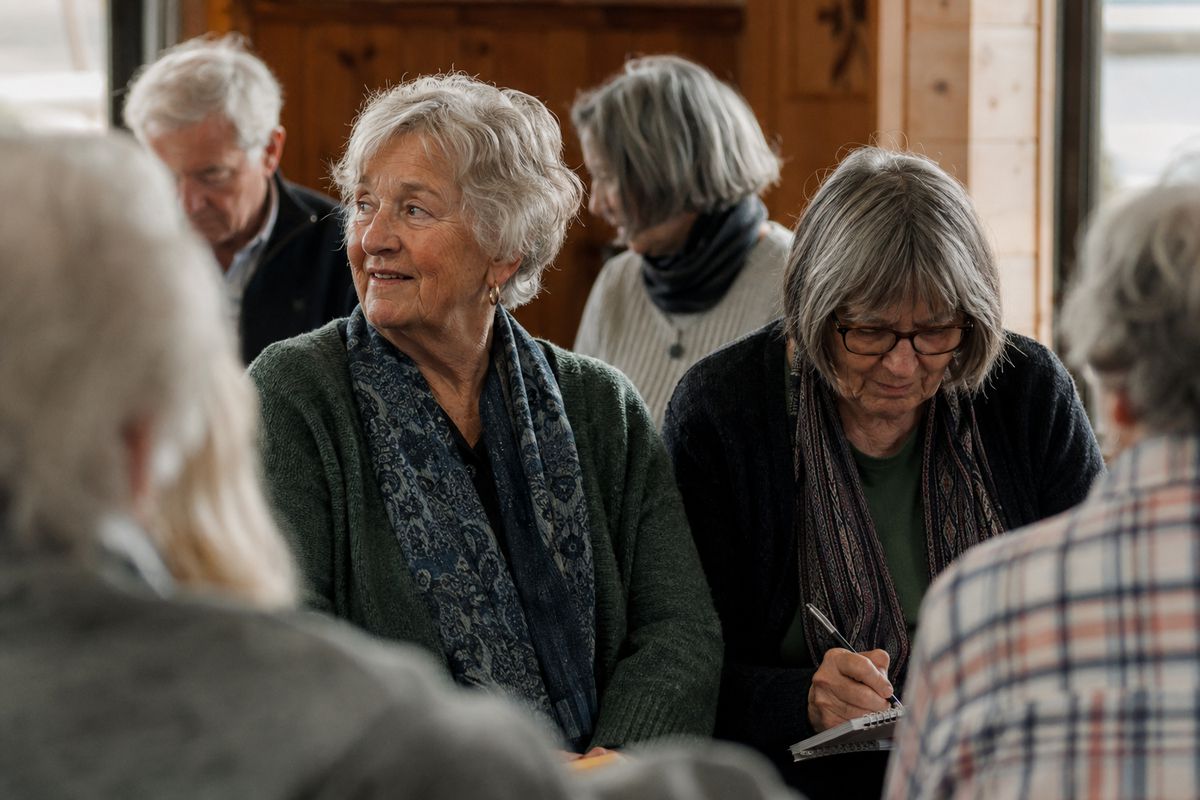
Scotland's Mental Health First Aid (SMHFA) is an established 12-hour programme that must be delivered by a qualified SMHFA instructor. Programme quality is continuously monitored by Public Health Scotland.
This tailored version keeps the recognised SMHFA programme intact while making the discussion, examples and context more relevant to community settings. The core learning remains SMHFA; the tailoring sits in how that learning is facilitated and connected to the kinds of conversations people may encounter through volunteering, community activity and trusted local relationships.
Community groups are often places where people know one another over time. Someone may notice that a regular attendee seems different, hear something difficult during an ordinary conversation or become the person another member naturally turns to. This course helps people respond with greater confidence while keeping the limits of their role clear.
Mental health conversations do not only happen in workplaces or formal support services. They happen in community halls, sports clubs, charities, faith groups, local associations, activity groups and the many other places where people meet, volunteer and build relationships.
In those settings, support is often informal. A volunteer, organiser, coach or group member may notice that someone is struggling simply because they know them and see them regularly. They may become concerned about a change in behaviour, hear someone talk about feeling overwhelmed or find themselves in a conversation they were not expecting.
Caring about someone does not mean having to become their counsellor or take responsibility for their mental health. This tailored SMHFA course gives community groups a practical framework for recognising when someone may need support, approaching a conversation, listening without judgement and helping them towards appropriate further help. It also covers mental health crisis and suicide risk, while keeping clear boundaries around what a Mental Health First Aider can and cannot be expected to do.
Community organisations, charities, voluntary groups, community hubs, sports and activity groups, faith groups, local associations, peer networks and grassroots organisations that want people to feel more confident when mental health becomes part of an everyday conversation.
Help volunteers and community members feel better prepared when someone they know, support or see regularly may be experiencing mental health distress.
Give people a practical framework for noticing concern, approaching someone and listening without judgement rather than avoiding the conversation for fear of getting it wrong.
Help people understand what useful initial support can look like without becoming responsible for managing another person's mental health or recovery.
Understand and practise the five-step approach used to provide initial Mental Health First Aid support.
Build awareness of common mental health problems and consider how changes may become noticeable through regular community contact and everyday relationships.
Develop skills in asking appropriate questions, listening carefully and responding in a calm, supportive way without rushing to advise, diagnose or solve.
Explore how attitudes and assumptions can make it harder for people to speak openly, ask for support or feel understood within their community.
Understand what to say and do when someone may be experiencing a mental health crisis, including when there are concerns about suicide.
Learn how to provide immediate help while recognising personal boundaries and when professional, specialist or urgent support is needed.
We consider how mental health conversations can arise through ordinary community relationships, volunteering, regular contact and informal support rather than through a formal workplace or professional role.
Guidance on what Mental Health First Aid is, how the role works in practice and why appropriate boundaries matter particularly when relationships may already be personal, local or informal.
How attitudes, assumptions and stigma can influence people's experiences of mental health problems and their willingness to speak openly or seek support.
Understanding recovery from mental health problems and the role of hope, self-help, community connection and appropriate professional support.
The relationship between alcohol, drugs and mental health problems, and what this can mean when offering initial support.
An introduction to recognising risk, approaching conversations about suicide and responding appropriately when someone may be in crisis.
The importance of listening without judgement, asking appropriate questions and helping someone feel heard without feeling responsible for fixing what they are experiencing.
Basic information about depression and anxiety, how they can affect people in different ways and how to offer appropriate initial support.
Basic information about psychosis and how to offer first aid to someone experiencing a psychotic episode.
The recognised SMHFA content is connected to community life through relevant discussion, examples and reflection rather than being delivered as a generic workplace course.
The 12 hours can be delivered as two full days or arranged in shorter sessions to work around volunteers, community activities and the needs of the group.
The course includes a mixture of activities, films and discussion, with opportunities to practise listening and responding rather than relying on presentation alone.
Participants receive the SMHFA manual to take away and use as a reference after the course.
Participants receive a certificate of attendance on completion of the course.
Scotland’s Mental Health First Aid has a defined programme, but the experience in the room also depends on the facilitator. Jean Pryde is an accredited SMHFA facilitator and brings 30 years’ experience working in mental health settings to the way the course is delivered.
Green Ribbons takes a practical, plain-speaking approach to difficult subjects and has delivered training for organisations including Diageo, Macallan and the Royal College of Veterinary Surgeons, alongside professional bodies and community groups.
Tell us a little about your group and what you’re looking for. We can talk through whether this course is the right fit and the practical arrangements.
Open this course on your phone or send it to someone else.
Scan with your phone camera to open the same information on your mobile.
Pass the link to a colleague, save it for later or share it with someone else.